
Free Call +23273017502
Call Us Now 24/7 Customer Support
Our Location
48 Robert Street, Freetown
info@smartfarmssl.com
Free Call +23273017502
Call Us Now 24/7 Customer Support
Our Location
48 Robert Street, Freetown
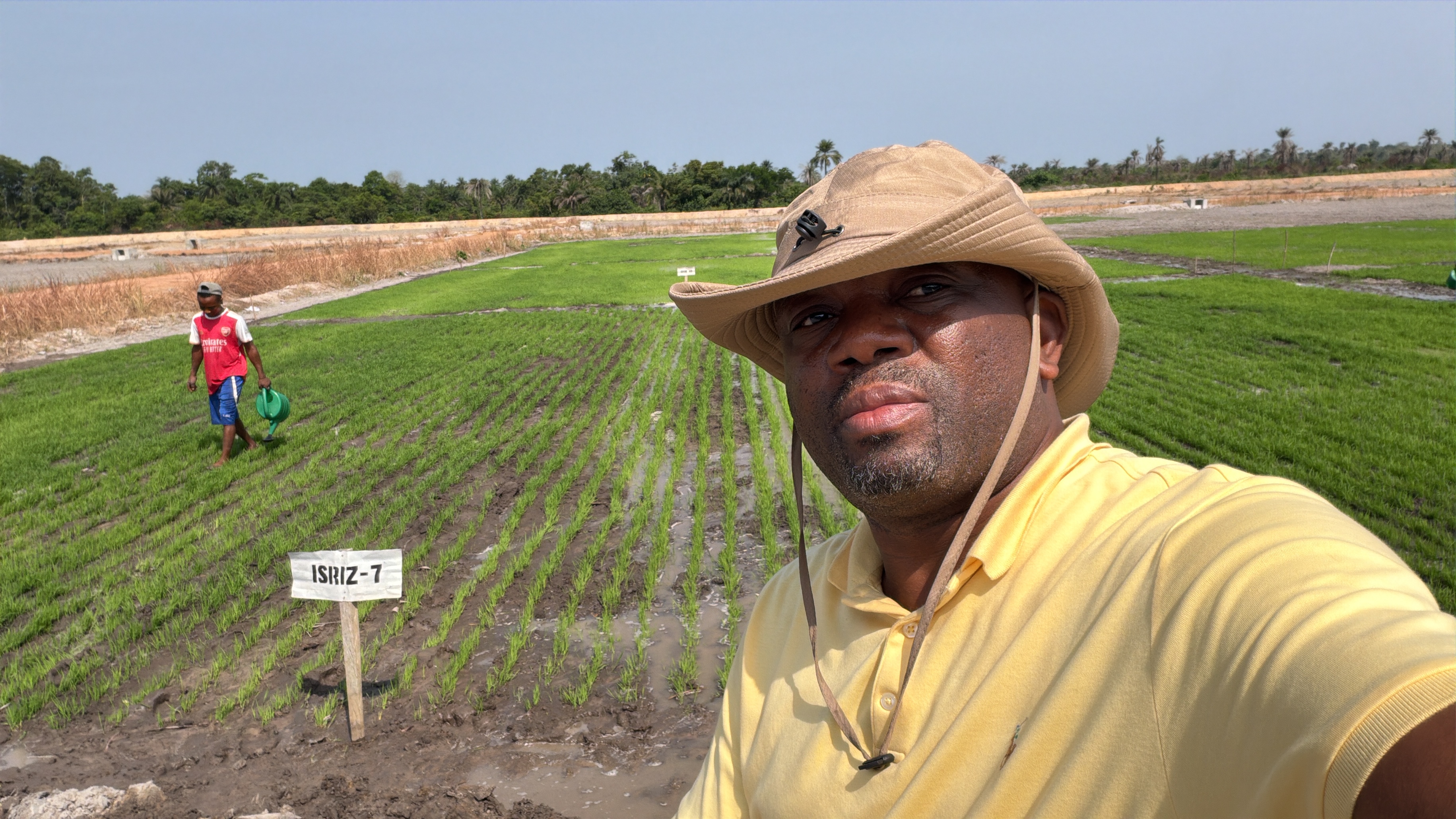
Smart Farms Ltd - is a leading agribusiness company that is transforming agriculture in rural communities in Sierra Leone. Established in 2014, the company was founded with a vision of building resilient agricultural value chains that improve food security, create employment, empower farming communities, and contribute to national economic development.
Today, Smart Farms has evolved into a diversified agribusiness operating across multiple agricultural value chains, including certified seed production, commercial crop farming, greenhouse horticulture, integrated livestock production, agricultural mechanization, agro-processing, value addition, farmer aggregation, and agricultural investment facilitation.
Our work is guided by a simple but powerful belief: sustainable agriculture is the foundation for food security, inclusive economic growth, and prosperous rural communities.
Whether you're looking for a partner or just some information on how to best utilize your land correctly, look no further than Smart Farms Ltd.
Smart Farms' comprehensive suite of products cover all needs from land preparation, improving crop rotation techniques to advanced farm management systems that increase efficiency across all value chains. With access to on-site experts and a range of smart technology solutions - launching our own farming business is extremely seamless!
With Smart Farms' agricultural machines and highly efficient ream, they provided timely and cost savings services for my rice farm while minimizing post harvest loses compared to the traditional methods we were using previously.
Smart Farms' innovation could be exactly what you need for success in today’s farming era!
Chief Abdul
Corporative Farm LeaderFarming is an important part of modern life. It provides us with food, fuel, and clothing materials. To ensure the continued success of farms across the world - both now and in generations to come - it’s essential that farmers learn good practices when it comes to growing crops, rearing livestock, and managing their land or premises.
Good farming practices are essential for the successful growing of crops, and raring livestock. Below are guides on good farm practices for cereals, vegetables, herbs, livestock, etc.
• Cereal Guide – Covers preparation techniques such as pre-planting tillage pest management planting fallow season winter care weed control harvesting storage postharvest healthiness & reducing pollution; .
• Vegetable / Herbs Guide – Presents information about compost/manure making quality irrigation scheduling light requirements transplant shock companion planting knowing seedling types telling healthy root system from unhealthy ones plus general hygiene factors involved floriculture & hydroponics; .
• Livestock Guide– Supports raising cows, sheep, goats, chickens ducks, rabbits ostriches, etc. includes feed tips, animal accommodation, deworming, milking, genetics conditioning ,birthing, increasing nutritional value, common diseases prevention methods, hormone therapy, first aid kits, showing environments conservation programs, population monitoring, rehabilitation relocations, governmental praxis legislation issues, herd longevity compassionately maintained et cetera....
Conclusion: As you can see there is much more depth behind good farm practices than meets the eye. With this guide we hope that those interested in farming will find benefits navigating through the outlines provided hereunder successfully.
Farm mechanization is the use of machines and technology to automate certain tasks related to farming. This can help increase productivity, efficiency, and quality, while reducing costs associated with labor. While it has many benefits, there are also some challenges associated with farm mechanization as well.
Benefits:
1. Increased productivity and yield – Farm machinery can significantly reduce manual labour requirements allowing for a higher output in a shorter amount of time; this contributes to increased yields overall per acre or hectare farmed each year.
2. Lower production cost – Investing in machine automation leads to lower fixed-costs since they replace human labourers who have variable wages depending on the job market at present times; thus farmers no longer need to worry about relying on seasonal employees and paying them salaries accordingly which further reduces their long term expenditure hence increasing profits over time if replaced by high end money saving implementations like robots etc...
3. Improved precision/accuracy & consistency – Machines generally provide much finer control than humans ever could leading both farmers having more precise seeding rates along with less wastage due vastly improved accuracy level achieved through modern technologies such as GPS enabled navigation modules allowing for pinpoint accuracy outputs when coupled together making sure all areas are served equally helping maintain careful balance between inputs vs returns from an irrigation cycle point using industrial grade equipment rather than subpar improvised home designed plumbing works one might find lying around rural area’s expecting better crop harvests otherwise
Challenges:
1 High capital investments required upfront that may not offer predictable return cycles leaving farmer's investment prone towards risks without guaranteed access via insurance products (not yet available), this alone puts extreme stress upon already delicate finances of small establishments respectively considering economic slump likely during COVID outbreak where liquidity evaporates fast risking everything once invested into such systems.. Additionally maintenance costs should be taken into consideration too in order operate seamlessly that basically depends solely upon timely servicing necessary instead waiting until disastrous failure taking place beforehand costing fortunes replacing entire setup overnight!
2 Modernizations result over throwing traditional methods followed since years substantially demanding massive adjustment curves workers must face requiring proper training sessions prior begin working alongside mechanical giants draining chunky sums away just shaping our manpower fit within race outdoing foreseeable digital competition bringing socio economic imbalance amongst society adding parallel boiling points putting pressure onto age old generation unwilling adapting new advancements equitably ..
Sustainable farming is a type of agriculture that focuses on maintaining the long-term health and productivity of the land. In order to achieve this, farmers must practice methods that are environmentally friendly and socially responsible. Below is a general guide to sustainable farming:
1. Utilize natural resources such as water efficiently by practicing conservation measures like crop rotation or utilizing mulch or cover crops for soil fertility retention.
2. Use covers crops that protect soils against erosion caused by wind & runoff/water action and add organic matter which increases microbiological activity promoting healthier uptake efficiency within plants grown afterwards.
3. Invest in renewable energy sources such as solar panels, wind turbines, biodigesters which can provide electricity alternatives helping to increase financial efficiency while reducing emissions impact from fossil fuel use associated with traditional grid power consumption;
4) Recycle materials through composting organics into fertilizer nutrients improving yields without synthetic inputs;
5) Implement integrated pest management (IPM); by identifying pests before they cause significant damage; reducing pesticide usage while increasing the biological diversity of beneficial insects; monitoring traps biweekly during spring, summer and fall months; carefully administering appropriate pesticides when necessary that are targeted at specific organisms in an effort towards minimal contamination impact upon beneficial species populations within the environment.
6) Encourage animal welfare practices in livestock operations emphasizing humane treatment standards both inside farms and during transport/processing activities.
7) Reduce food waste throughout supply chain linkages ensuring farm products reach consumers with minimal loss incurred along delivery routes thus adding value back towards more efficient production cycles so maximize yields contributes respectively towards world hunger reduction initiatives too;
8 ) Employ agroforestry techniques when possible to aid carbon sequestration, contributing overall than done otherwise if left idle instead. Bringing advantages to not only healthier air quality in the environment but also lessening impacts involved in global warming trend predictions.
The Outgrower Scheme is an agricultural business model that allows smallholder farmers to be linked with large buyers, such as food processing companies or supermarkets. This scheme provides the following benefits:
1. It helps smallholders increase their productivity by providing access to inputs, improved technology and capacity building services.
2. Smallholders are able to get a better price for their produce due to fixed prices set in contracts agreed between them and larger buyers.
3. The out vower's scheme gives more financial security compared of other marketing alternatives since payments are based on delivery schedules rather than crop yields, which can be affected by factors beyond control such as drought and pests infestation.
4 .It increases income opportunities rural areas leading improving local economies Such schemes help ensure sustainable livelihoods through facilitative relationships with big agribusiness enterprises that give preference purchasing from the link growers who grow specific commodities at certain scales according to defined standards designed create value added outputs
The steps involved in producing rice depends on the country and region. Generally, however, the production of rice can be divided into the following stages below:
1. Land Preparation. This includes developing and maintaining the soil through ploughing, harrowing, and ridging to create an even layer in which to plant rice seeds.
2. Seeding and Transplanting . Farmers use different methods such as manual seeding, direct drilling, or transplanting seedlings from nurseries into wet fields for growing rice plants.
3. Weeds Control . After sowing or planting seeds farmers need to control weeds by shallow manually weeded out until they become established enough to not be damaged by mechanical weeders used later on in growth stage of their crops’ life cycles..
4 Fertilization : Applying organic fertilizer helps promote productivity while enriching soils with important nutrients needed for proper crop development over time Rice growers also rely on some chemical fertilizers when dealing with nutrient deficiencies found within competitively low-fertility lands They usually spread both types across field after performing tests that determine precise nutritional needs
5 Pest/ Disease Management : Utilizing Integrated pest management (IPM) approach is essential for controlling insect pests problems, reduces costs associated with battling infestation. It entails using combination of approaches like biological controls, nonchemical methods, preventing known diseases etc. These measures can help keep predators disease under acceptable levels, eliminating damaging effects that may have otherwise caused had no intervention taken place.
6 Harvest: Occurs when grain reaches maturity that is when paddy shafts become pale yellow requiring removal from paddies before completely air dried, Transported and Stored.
A small river named Duden flows by their place